
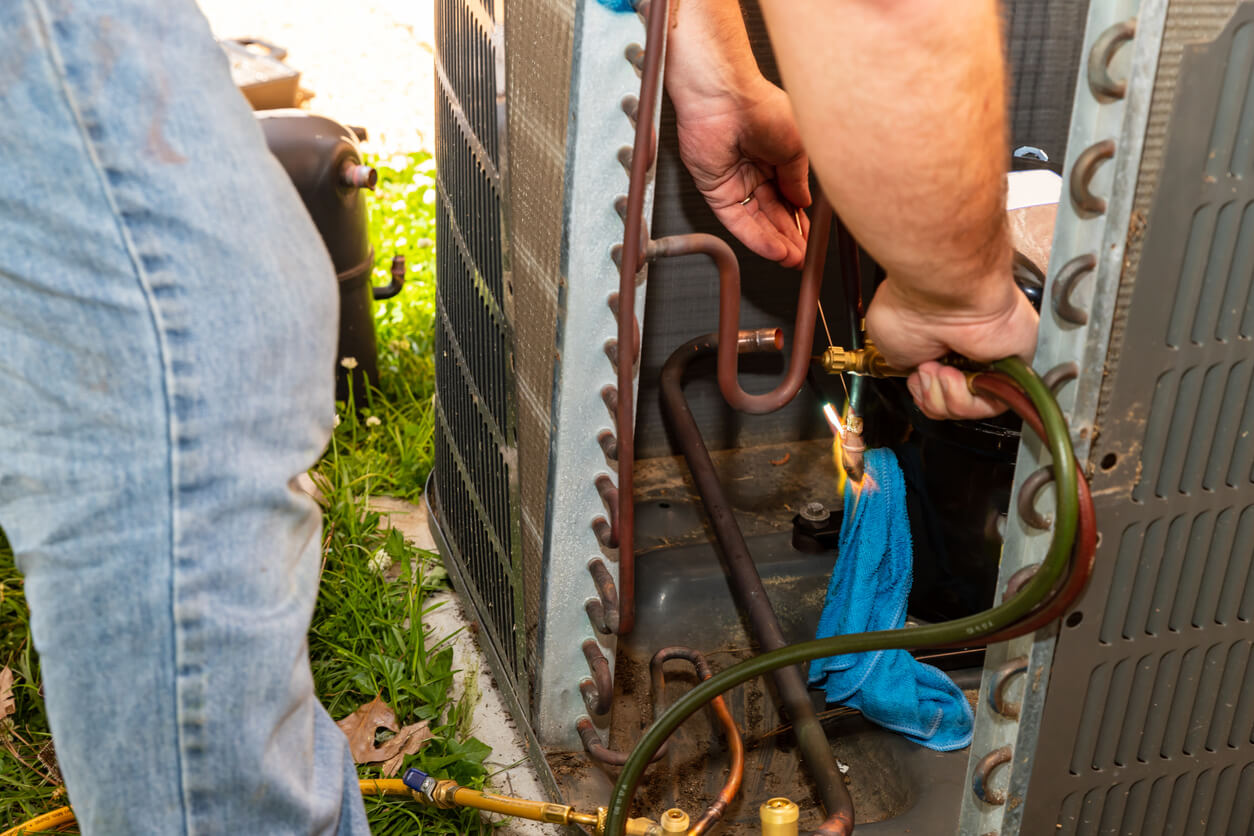
If you notice your HVAC leaking water, it is your home’s way of telling you something’s wrong. Sometimes the issue is minor, like a clogged drain line or a dirty air filter. Other times, water leaks can point to a frozen evaporator coil, a damaged drain pan, a condensate pump problem, or even a refrigerant leak. In every case, the message is the same: your system is not moving moisture where it is supposed to go.
A little condensation is normal inside an air conditioner. A puddle on the floor is not. When an HVAC system leaking water starts to leave stains on drywall, soak insulation, or create water pooling around the indoor unit, the problem can snowball fast. In homes throughout Sonoma, Marin, and Napa Counties, where comfort systems may run hard during warm spells and shoulder seasons alike, catching an AC leak early can help you avoid water damage, mold growth, and costly repairs.
Why an HVAC system produces water in the first place
Your air conditioner does more than cool the air. It also removes moisture. As warm indoor air passes over the evaporator coil, condensation forms on the coil, much like water beading on a cold glass in summer. That moisture drips into a drain pan and exits through the condensate drain line.
When everything is working properly, that process is invisible. The hvac unit cools, the drain line carries water away, and the system stays leak free. But if the pan cracks, the condensate drain line gets clogged, or the evaporator coil to freeze creates a sudden rush when ice melts, you end up with leaking water where it should never be.
The most frequent cause: a clogged drain line
The most frequent cause of ac leaking water is a clogged drain line. Over time, algae, sludge, dust, and other debris can build up inside the condensate drain line. When that happens, water backs up instead of draining outdoors or to the proper termination point.
A clogged condensate drain line acts like a blocked gutter in a storm. The water has nowhere to go, so it spills over. That can lead to water leakage around the air handler, a wet closet floor, or even a ceiling stain if your indoor unit is installed above living space. If your air conditioner leaking water seems otherwise to be cooling normally, a clogged drain line is one of the first things a professional HVAC technician will check.
How a dirty air filter can trigger a leak
A dirty air filter is another common reason for an ac leak. When the air filter is loaded with dust and restricted airflow, your evaporator coil can get too cold. That can cause the evaporator coil to freeze, and once the frozen evaporator coil thaws, all that extra moisture can overwhelm the drain pan and drain line.
This is why a dirty air filter can create a chain reaction. First, less air moves across the coil. Then the coil gets too cold. Then frozen coils develop. Then ice melts and excess water ends up leaking water onto the floor. Homeowners are often surprised by this because the filter seems like such a small part, but a dirty filter can absolutely contribute to a bigger system issue.
Frozen evaporator coil problems
A frozen evaporator coil is one of the clearest warning signs that your air conditioner is under stress. If you see frost, ice, or reduced cooling from your ac unit, the leak may not be coming from a plumbing problem at all. It may be coming from a freeze-thaw cycle inside the hvac system.
There are a few reasons an evaporator coil may freeze. A dirty air filter is one. Low refrigerant is another. Poor airflow from blocked vents or blower issues can also do it. Once the evaporator coil to freeze becomes part of the picture, the moment ice melts, the condensate drain pan may not be able to control drip and direct all that water away quickly enough. That is when homeowners notice ac dripping water or a sudden leak inside near the return closet or attic equipment.
Low refrigerant and refrigerant leak concerns
A refrigerant leak can also lead to ac leaking water, even though refrigerant itself is not the water you see. Low refrigerant levels reduce pressure in the coil, which can make the evaporator coil too cold and cause a frozen evaporator coil. Later, when the system cycles off and ice melts, the result is leaking water.
This is one of those issues that looks simple from the outside but is not a DIY fix. Low refrigerant and low refrigerant levels should be handled by a certified HVAC technician. If your hvac system leaking water is also struggling with weak cooling, hissing sounds, or longer run times, a refrigerant leak may be part of the problem. Ignoring it can push the system toward further damage or even system failure.
Drain pan issues: cracked, rusted, or out of position
Your drain pan has one job: catch condensation and send it toward the drain line. If the drain pan is cracked, misaligned, or deteriorated, water can escape before it ever reaches the drain. In older systems, a rusted drain pan is especially common. Metal pans can corrode over time, and once corrosion opens up pinholes or weak spots, small water leaks start to appear.
A damaged drain pan may not look dramatic, but it can create steady water damage over weeks or months. Some homeowners only discover the problem after they smell moisture, notice soft drywall, or see staining around the air handler. A rusted drain pan or damaged drain pan often needs repair or replacement, especially if the condensate pan can no longer hold water reliably.
Condensate pump failures
Some systems rely on a condensate pump to move water out when gravity alone cannot do the job. This is common when the indoor unit is located in a basement, interior closet, or other area where the condensate line must travel upward or across a longer path. If that pump stops working, the water has nowhere to go.
A failed condensate pump can cause quick water leakage because the drain pan fills faster than expected. You may hear the pump struggling, notice intermittent shutoffs, or find the ac leak appears only during heavy cooling cycles. In these cases, the pump itself, the float switch, or the connected drain line may need service. A professional HVAC technician can test the condensate pump and confirm whether it should be repaired or replaced.
Improper installation can cause recurring leaks
Sometimes the issue is not age or maintenance. It is improper installation. If the hvac unit is not level, if the condensate line was routed poorly, or if the drain pan was installed without the correct slope, proper drainage may never happen consistently.
Improper installation is frustrating because the leak can seem random. Maybe the system only leaks during very hot weather, after long cooling cycles, or when humidity spikes. But recurring water leaks often trace back to a setup issue that should have been corrected from day one. A well-installed hvac system should move condensation cleanly and predictably, not leave you guessing whether there will be a puddle each afternoon.
Signs your air conditioner leaking water needs prompt attention
Not every air conditioner leaking water creates a dramatic puddle right away. Sometimes the clues are subtle. You may notice a musty smell, damp insulation near the air handler, stained ceiling paint, warped baseboards, or reduced cooling from the ac system. You might also hear dripping, see moisture around the pan, or find that the air filter gets dirty unusually fast because the system is pulling in dirty air from a compromised area.
Other symptoms can point to a bigger underlying issue. If your air conditioner is leaking water and also blowing warm air, short cycling, or forming ice, there is a good chance the leak is part of a larger performance problem. That combination deserves a closer look before the leak causes further damage to flooring, framing, or nearby electrical components.
What you can safely check before calling for service
There are a few preventive measures homeowners can take before scheduling service. First, check the air filter. If you have a dirty air filter or dirty filter, replace it. A clean air filter helps restore airflow and can reduce the chance of the evaporator coil freezing again. Second, look for obvious standing water in the condensate pan or around the drain pan.
If you can access the drain opening safely, you may be able to use a wet dry vacuum on the outside end of the condensate drain line to help clear a clogged condensate drain line. Some homeowners use this method to pull out algae or sludge from a clogged drain line. You can also regularly clean around the unit so dust and debris are less likely to contribute to dirty air and drainage issues. Still, if the leak returns, the pan is rusted, or the system shows signs of freeze, it is time to call a professional.
What not to ignore when water is leaking
Do not assume leaking water is harmless just because it looks clean. Even a small ac leak can lead to water damage behind walls, under flooring, or above ceilings. Moisture that lingers can contribute to mold growth, damaged insulation, and indoor air quality concerns. In a tight mechanical closet or attic, a hidden leak can quietly do more damage than a burst pipe because it goes unnoticed for longer.
You also should not keep running the air conditioner if you suspect frozen coils, low refrigerant, or repeated water backs into the drain pan. Continued operation can make the leak worse and increase the chance of costly repairs. If the system is telling you something’s wrong, listen early. HVAC problems are a lot like a loose roof shingle in a windstorm: small at first, expensive later.
How a technician diagnoses the real cause
A professional HVAC technician will usually inspect several points in sequence. They will examine the drain pan, condensate drain line, condensate pump, evaporator coil, air filter, refrigerant pressure, and overall system airflow. This matters because many leaks are not caused by a single failure. A clogged drain plus a dirty air filter plus an aging pan can all be causing leaks at the same time.
That is why a quick wipe-up is not really a fix. If your hvac system leaking water has an underlying refrigerant leak, frozen evaporator coil, or rusted drain pan, the problem will come back. A thorough diagnosis helps identify whether the right solution is to clear the drain, repair the pump, replace the pan, correct installation issues, or address low refrigerant levels.
How to prevent future leaks
The best way to prevent leaks is with routine maintenance. Regular inspections help catch a clogged condensate drain line, dirty air filter, weak condensate pump, or early pan corrosion before they turn into active water leaks. Seasonal tune-ups also help your air conditioner maintain proper airflow, proper drainage, and more stable cooling performance.
Simple habits help too. Replace the air filter on schedule. Keep surrounding areas clean so dust and debris do not build up. Have the drain line checked and regularly clean components that collect sludge or moisture. If your system is older, ask whether the condensate drain pan or rusted drain pan should be proactively replaced. These preventive measures can go a long way toward keeping your system leak free.
When to call Bragg Home Services
If your ac leaking water does not stop after a filter change, or if you see signs of a clogged drain line, frozen coils, low refrigerant, or a failing pump, it is time for expert help. Water and HVAC equipment are a bad combination, and what starts as a small leak can quickly become water damage, comfort loss, and a repair bill that keeps growing.
At Bragg Home Services, we help homeowners across Sonoma, Marin, and Napa Counties get to the source of HVAC water leaks and fix them the right way. Whether the problem is a clogged condensate drain line, a rusted drain pan, a frozen evaporator coil, or a condensate pump issue, our team can diagnose the cause and recommend a clear solution with no surprise pricing.
The bottom line on HVAC leaks
When your HVAC is leaking water, it usually means the system is failing to manage condensation the way it should. The cause may be a clogged condensate drain line, dirty air filter, frozen evaporator coil, damaged drain pan, condensate pump failure, or refrigerant-related issue. Whatever the trigger, the leak is a symptom worth taking seriously.
The good news is that most water leakage problems can be fixed once the true cause is identified. The sooner you act, the better your chances of avoiding further damage, restoring reliable cooling, and keeping your home comfortable. If your air conditioner leaking water has you reaching for towels or wondering whether that ceiling spot is getting bigger, don’t wait for the puddle to answer for you.